Why Adding More People to Your Project Is Often the Worst Thing You Can Do
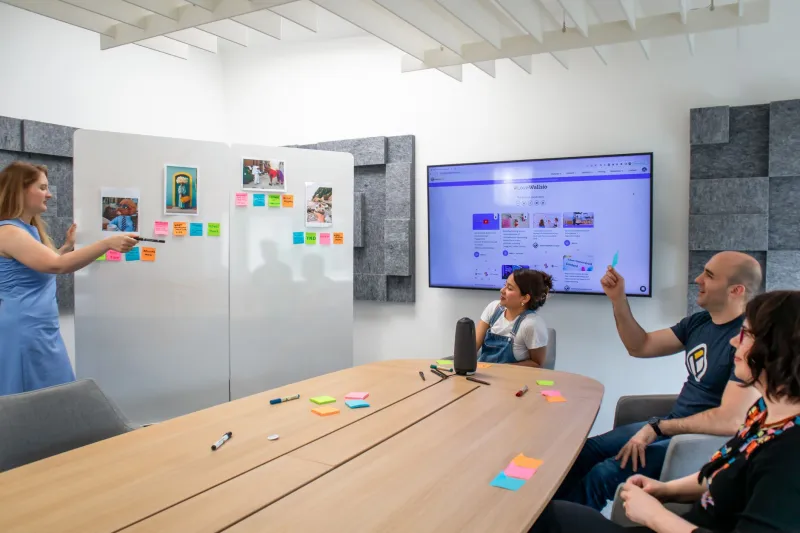
There's a moment in almost every project where someone at the table says it: "Maybe we just need more people on this."
It sounds reasonable. Logical, even. More hands, more output, faster finish line. But if you've been around enough launches—whether you're running a startup, managing a product team, or leading a creative initiative—you've probably seen how that move plays out. More often than not, it doesn't speed things up. It grinds them to a halt.
This is what we're calling the collaboration paradox: the idea that growing your team can actually shrink your momentum. And understanding it might be one of the most useful things you do for your next project.
The Math That Breaks Down Fast
Here's something that doesn't get talked about enough in project planning conversations: every person you add to a team doesn't just add one new working unit. They add a web of new communication lines.
There's actually a formula for this. With n team members, the number of possible communication channels is n(n-1)/2. So a team of 4 has 6 channels. A team of 8 has 28. A team of 12? Sixty-six potential communication paths to manage.
That's not a team. That's a small conference.
And every one of those channels is a place where information can get lost, misread, delayed, or duplicated. Suddenly half your project energy isn't going toward building anything—it's going toward keeping everyone aligned on what's already been decided.
Decision-Making Gets Slower as the Room Gets Bigger
Here's where it gets psychologically interesting. Larger groups don't just create more communication overhead—they fundamentally change how decisions get made.
In a small team of three or four, decisions happen fast. There's a shared context, a built-in trust, and enough intimacy that someone can just say, "I think we go with option B, let's move." People are comfortable with that. They trust the process.
Scale that to eight, ten, or twelve people? Now everyone feels like they need a voice. That's not inherently bad—diverse input has real value—but without structure, it creates what researchers call diffusion of responsibility. Everyone assumes someone else is steering. Meetings run long. Follow-up threads spiral. Simple calls get escalated into async debates that eat entire weeks.
The friction isn't just logistical. It's psychological. People in large groups are less likely to take ownership, more likely to hedge their contributions, and—ironically—less likely to speak up when something's going wrong.
The Real Cost Is Invisible Until It Isn't
Most project managers track budget and timeline. Very few track what you might call collaboration debt—the accumulated cost of onboarding, syncing, re-explaining, and re-aligning that comes with every team expansion.
Every new person you add requires existing team members to invest time bringing them up to speed. On a tight timeline, that investment rarely pays off before the project wraps. You end up with a bigger team that's paradoxically less productive in the near term, right when you need speed the most.
This is what Fred Brooks identified decades ago in his classic The Mythical Man-Month: adding people to a late project makes it later. The concept still holds. It's just that most of us don't internalize it until we've lived it.
Smaller Groups, Sharper Output
So what actually works? Research and real-world experience keep pointing to the same answer: small, focused teams with clear ownership.
Amazon famously uses the "two-pizza rule"—if you can't feed your team with two pizzas, it's too big. That's a bit of a blunt instrument, but the instinct is sound. Teams in the 3-6 person range tend to hit a sweet spot where communication stays manageable, accountability stays personal, and momentum stays high.
The key word there is focused. Small teams only outperform large ones when roles are clear and overlap is minimal. If three people are all vaguely responsible for the same thing, you haven't built a tight team—you've built a slow one with fewer people.
Matching Team Size to Project Phase
Here's a practical framework worth keeping in your back pocket:
Discovery and strategy phase: Keep it tiny. Two to three people max. This is where you're defining the problem, setting direction, and making foundational decisions. More voices here creates premature complexity.
Build or execution phase: This is where you can expand—but with intention. Bring in specialists with clearly defined lanes. Think of it less like "adding to the team" and more like deploying the right tools for specific jobs.
Review and refinement phase: Pull back again. Feedback loops work best when they're tight. A focused review group of three to five people will give you more actionable input than a 15-person Slack thread where everyone's hedging their opinions.
Launch and handoff phase: Lean on a core decision-making duo or trio. Speed matters here. Consensus by committee during a launch window is a recipe for missed timing.
When You Actually Do Need More People
None of this means you should never scale. Some projects genuinely require large teams—complex builds, multi-market campaigns, enterprise-level rollouts. The point isn't that bigger is always worse. It's that size should be a deliberate decision, not a default response to pressure.
Before you expand your team, ask:
- Is the bottleneck actually a capacity problem, or is it a clarity problem?
- Will adding this person reduce friction or add it?
- Do we have the structure in place to onboard someone without slowing down the people already in motion?
If you can't answer those questions clearly, hold off. Solve the clarity problem first. A focused team that knows exactly what it's doing will almost always outrun a bigger team that's still figuring that out.
Build Leaner. Launch Stronger.
The best project teams we've seen at Go3 Project aren't the ones with the most resources or the most headcount. They're the ones who are ruthlessly intentional about who's in the room and why.
That kind of discipline is harder than it sounds. There's always pressure to add people when things feel uncertain—it's a comfort move, a way of spreading the risk. But more often than not, the real move is to tighten up, clarify ownership, and trust a smaller group to move faster.
Build together, sure. But build lean.